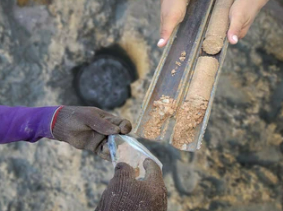
🏗️ Soil Test Before Construction
🔍 Purpose
Soil testing before construction is essential to determine whether the soil can safely support the structure. It helps identify soil type, load-bearing capacity, moisture content, settlement characteristics, and other properties critical for foundation design.
⚙️ Major Soil Tests
- Standard Penetration Test (SPT)
- Plate Load Test
- California Bearing Ratio (CBR) Test
- Moisture Content Test
- Atterberg Limits Test
- Specific Gravity Test
- Compaction Test (Proctor Test)
- Grain Size Analysis
🧪 1️⃣ Standard Penetration Test (SPT) – IS 2131
This test measures the soil resistance (N-value) by driving a split spoon sampler into the soil at various depths.
Procedure
- A borehole is drilled up to required depth.
- SPT sampler is placed at the bottom.
- A 63.5 kg hammer falls from 750 mm height.
- Number of blows required to drive 300 mm is recorded as N-value.
Typical N-Values
- Loose sand: 4–10
- Medium dense sand: 10–30
- Dense sand: 30–50
🧪 2️⃣ Plate Load Test – IS 1888
This test determines the safe bearing capacity (SBC) of soil by applying load on a steel plate placed at foundation depth.
Formula
SBC = Load causing settlement / Area of plate
Typical Values
- Soft clay: 50–100 kN/m²
- Dense sand: 200–600 kN/m²
🧪 3️⃣ California Bearing Ratio (CBR) Test – IS 2720 Part-16
Used mainly for road, pavement, and subgrade design to determine soil strength.
CBR Formula
CBR = (Test load / Standard load) × 100
Typical Values
- Poor soil: 2–5%
- Good soil: 6–10%
🧪 4️⃣ Moisture Content Test
Helps understand the water present in soil which affects compaction and strength.
Formula
Moisture (%) = (Wet weight − Dry weight) / Dry weight × 100
🧪 5️⃣ Atterberg Limits Test – IS 2720
Determines soil consistency and behavior with change in moisture.
- Liquid Limit (LL)
- Plastic Limit (PL)
- Shrinkage Limit (SL)
🧪 6️⃣ Grain Size Analysis
This test classifies soil as sand, silt, or clay using sieve analysis and hydrometer test.
📏 Soil Bearing Capacity (SBC)
SBC is the maximum pressure that soil can safely bear without failure.
Typical SBC Values (General)
- Soft Clay: 5–10 t/m²
- Medium Sand: 20–30 t/m²
- Dense Sand: 30–50 t/m²
🏗️ Importance of Soil Testing
- Prevents settlement and structural failure.
- Determines foundation type and depth.
- Ensures safety of the building.
- Helps in cost estimation.
- Identifies soil problems like swelling soil, loose sand, black cotton soil.
📊 Summary Table
| Test | Purpose | Typical Result |
|---|---|---|
| SPT | Soil density & strength | N-value: 10–30 |
| CBR Test | Road & pavement design | 5–10% |
| Moisture Test | Water content | 5–20% |
| Plate Load Test | Bearing capacity | 200–400 kN/m² |
| Grain Size | Soil classification | Sand/Silt/Clay |
📘 Conclusion
Soil testing is mandatory before any construction as it ensures the safety, stability, and durability of the structure. By identifying soil properties such as bearing capacity, moisture content, and density, engineers can design an appropriate foundation that prevents future problems like settlement, cracks, and structural failure.